
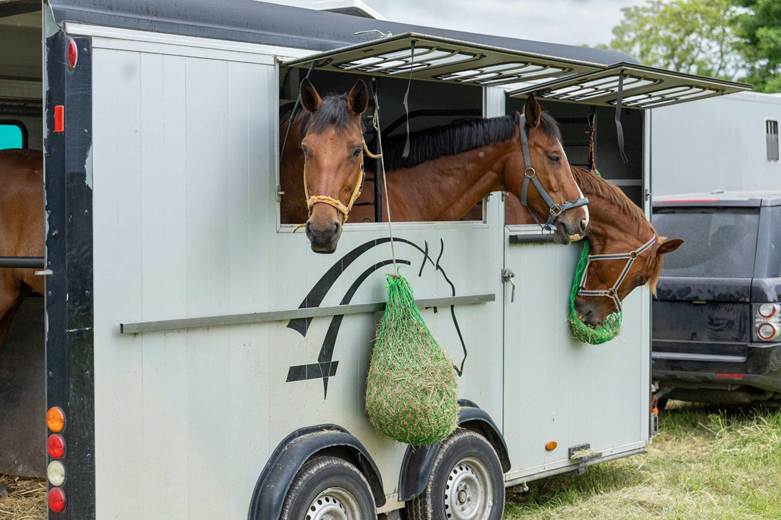
A show horse’s season is shaped by the miles between shows as much as by the rounds inside them. Riders who have competed internationally, as Freddie Vasquez Jr. has for Puerto Rico, tend to treat transport as part of the training plan rather than a logistics task handed off to the trailer.
That mindset matters. A horse can arrive at a show fit, sound and well schooled, then lose its edge somewhere on the highway. The programs that compete consistently well are usually the ones that plan travel with the same care they give to conditioning and flatwork.
Why Travel Belongs in the Training Plan
Travel changes a horse’s physical and mental state long before it reaches the ring, and a moving trailer is anything but rest. Horses brace against every turn, brake and bump, working muscles through the legs, back and neck for hours. Many step off tired despite never taking a stride.
Stress adds to the load. Long trips can weaken the immune system, and dusty air, warm temperatures, and limited drinking make the problem worse. The result is a horse that may look fine at unloading yet carry a hidden deficit into competition.
What Shipping Fever Reveals About Preparation
Shipping fever, a respiratory infection that can follow trips of more than three or four hours, shows how much travel risk comes down to preparation. Head position is a major factor, since a horse tied with its head held high for hours cannot clear dust, mucus and bacteria from its airways. Combined with stress and dehydration, those conditions give infection a foothold.
Early warning signs include:
- A rising temperature
- Coughing or nasal discharge
- Dullness or a reduced appetite
A fever after travel deserves a prompt call to the veterinarian. Caught early, most cases resolve faster and cost far less training time.
The Preparation That Separates Strong Programs
Strong programs start preparing for a long haul days before departure, making sure the horse leaves healthy, rested, and well hydrated. Recording its normal temperature, pulse, and breathing rate gives a baseline for comparison on the road. Vaccinations are best kept current, ideally given a few weeks before travel so the immune response has time to build.
Paperwork is part of preparation too. Horses crossing state lines need a negative Coggins test for equine infectious anemia, and most states also require a certificate of veterinary inspection issued within 30 days of travel. Requirements vary, so confirming the destination state’s rules in advance prevents delays at the show gate.
On the Road: Small Decisions With Big Effects
Once the trailer is moving, the best transport plans come down to clean air, steady water intake and smooth driving. Ventilation comes first, with vents and windows bringing in fresh air without blowing directly on the horse’s face. Dampened hay cuts down on airborne dust.
Regular stops matter just as much. Equine health experts commonly recommend a break every three to four hours, lasting around 30 minutes. Each stop is a chance to offer water, untie the horse when it is safe so the head can drop, and check temperature, legs and attitude.
Water intake deserves particular attention, because many horses drink poorly away from home. Bringing water from the home barn, or getting a horse used to lightly flavored water before the trip, encourages it to keep drinking on the road. Dehydration is one of the quickest ways for a long haul to undo weeks of careful conditioning.
Driving style is the most overlooked variable. Gentle braking, wide turns and steady acceleration let a horse settle instead of bracing for the next jolt, and the difference shows up in how fresh the horse looks on arrival.
Arrival Is Where Competition Preparation Begins
Competition preparation begins the moment a horse steps off the trailer, ideally with time to walk, stretch, and graze before stalling. That break loosens tight muscles and lets the horse lower its head naturally. A few days of temperature checks then catch any illness that develops after the trip, since problems do not always appear right away.
Scheduling also plays a role. Arriving a day or two ahead of an important class gives the horse time to recover and adjust to new footing, new surroundings and a new routine. A light first session is usually smarter than jumping straight into intense schooling.
Treating Each Trip as Training Data
A simple travel log turns every trip into useful information, from how much a horse drank to how it unloaded and how quickly it returned to normal. Over a season, those notes reveal patterns. Some horses travel beautifully, while others need more frequent stops or extra recovery days. Knowing the difference allows a program to plan each horse’s travel individually rather than by habit.
A Quiet Competitive Advantage
Horses that travel well tend to compete well. Treating the road as part of training, rather than a gap between shows, protects a horse’s health and preserves the work done at home. In a sport decided by fractions of a second and single rails, that preparation is often the quiet advantage behind a strong result.
