Categories
Freddie Vasquez JR

What Changes When a Rider Moves From Lessons to Competition

Moving from riding lessons into competition can feel like a natural next step, but the experience requires more than learning a course and showing up on the day. Freddie Vasquez Jr recognizes that competition introduces a different set of demands, asking riders to apply familiar skills while managing preparation, pressure, unfamiliar environments, and the inevitable imperfections that come with performing in public.

For a developing rider, this transition can be an important stage of growth. Competition provides an opportunity to discover how well skills hold up outside a familiar lesson environment while teaching riders how to prepare, adapt, and learn from experience.

The goal does not have to be winning immediately. A first competition can instead be viewed as a practical extension of the learning process.

Riding in a Lesson Is Different From Riding at an Event

Lessons usually take place in an environment designed for learning.

A trainer can provide instructions, adjust an exercise, explain a mistake, and help a rider regain confidence. The horse may also be familiar with the surroundings and routine.

Competition changes those conditions.

There may be unfamiliar horses, different arenas, new sounds, spectators, transportation demands, waiting periods, and a defined schedule. The rider must also remember the requirements of the class or course while making decisions independently.

That difference is important.

A rider who performs well during lessons may initially find competition challenging, not because the necessary riding skills have disappeared, but because those skills are being used in a much more complex environment.

Preparation Begins Before the Competition

Successful competition preparation does not begin when a rider enters the arena.

It begins days or weeks earlier.

Preparation can include:

  • Understanding the class or competition format
  • Reviewing the course or expected requirements
  • Preparing equipment and clothing
  • Confirming transportation and arrival details
  • Establishing an appropriate warm-up strategy
  • Maintaining the horse’s normal care and exercise routine
  • Getting adequate rest
  • Understanding the day’s schedule

These details may appear separate from riding ability, but they can influence how calmly and effectively a rider approaches competition.

Good preparation reduces the number of avoidable surprises.

Familiar Skills Need to Become Reliable Skills

During a lesson, a rider may successfully perform an exercise after receiving several reminders from a trainer.

Competition offers fewer opportunities for those reminders.

This makes reliability especially important. A rider needs to know how to maintain position, follow instructions, regulate pace, and respond to the horse without depending entirely on someone else to provide every correction.

That does not mean a developing rider needs to be completely independent before entering a competition. Instead, competition can reveal which skills are becoming automatic and which still require attention.

Those discoveries can then shape future training.

The Warm-Up Is Part of the Competition

The warm-up period deserves careful consideration.

It is not simply a chance to practice everything one more time.

The rider is preparing both physically and mentally while operating around other horses and riders. A useful warm-up should help the horse and rider establish communication without creating unnecessary fatigue or tension.

Trying to repeat every skill immediately before competing can sometimes have the opposite effect. A better approach is to focus on the elements that help the partnership feel organized and prepared.

The precise routine will differ according to the horse, rider, discipline, and competition format.

Managing Nerves Is a Skill

Nervousness is a normal part of competition.

Even experienced riders can experience increased heart rate, tension, or uncertainty before an important performance.

The goal is not necessarily to eliminate nerves. It is to learn how to function effectively while experiencing them. Simple preparation can help.

Knowing the schedule, understanding the course, arriving with sufficient time, and having a clear warm-up plan can reduce uncertainty. Riders can also use breathing, visualization, and deliberate attention to bring their focus back to the task.

Most importantly, nervousness should not automatically be interpreted as evidence that a rider is unprepared.

It can simply mean the moment matters.

The Horse Can Respond to the Rider’s Mental State

Horse-and-rider communication does not stop because competition begins.

If the rider becomes tense, distracted, or rushed, the horse may respond to those changes.

That makes self-awareness particularly valuable. A rider who notices increasing tension can use that awareness to make a deliberate adjustment rather than allowing the feeling to influence every decision. The objective is not to pretend to be completely calm.

It is to remain capable of communicating clearly.

Competition Reveals More Than Performance

A competition result provides useful information, but the final placing is only one measurement.

A rider can learn a great deal from the experience itself.

  • Perhaps the warm-up was too long.
  • Perhaps a particular part of the course created hesitation.
  • Maybe the rider became distracted after making an early mistake.
  • Perhaps the horse remained calm despite an unfamiliar environment.

These observations can be more valuable for long-term development than a single number on a results sheet.

Competition becomes useful when riders examine what happened rather than simply whether they won or lost.

Mistakes Become Learning Opportunities

A mistake during competition can feel much larger than a mistake during a lesson.

  • There are spectators.
  • There may be other competitors.
  • The rider knows that the performance is being evaluated.

But mistakes are part of the learning process.

A missed distance, incorrect response, loss of rhythm, or moment of hesitation can provide information about where additional preparation is needed.

The productive response is not to dwell on the mistake.

It is to understand it.

  • What happened?
  • Why did it happen?
  • Could preparation have changed the outcome?
  • Does the rider need more practice with the skill?
  • Would a different approach help?

These questions turn disappointment into useful feedback.

Expectations Should Match the Rider’s Stage

One of the most common challenges for developing competitors is setting expectations too high too quickly.

A rider may enter a first event expecting a polished performance because lessons have been going well. But competition introduces variables that cannot always be replicated at home.

A realistic first goal might be completing the course calmly, maintaining communication with the horse, or successfully applying a specific skill under pressure.

As experience increases, goals can become more ambitious.

This creates a progression in which competition becomes another form of development rather than a test of whether a rider is already finished developing.

Learning to Make Decisions Independently

Competition can accelerate decision-making skills.

During a lesson, a trainer may identify the next exercise or explain exactly when a rider should make an adjustment.

At an event, the rider has to process information independently.

That might involve adjusting pace, responding to a change in the horse’s attention, managing a mistake, or deciding how to approach a particular part of a course.

These decisions do not happen in isolation. They are built from training and experience. The more riders understand the reasoning behind their training, the better prepared they become to make decisions when circumstances change.

The Relationship With the Trainer Changes Too

A rider’s relationship with a trainer can evolve as competition experience increases.

The trainer remains an important source of instruction, but the rider gradually becomes more capable of describing what happened and identifying where difficulties occurred.

Instead of simply saying that something went wrong, a developing rider can begin explaining:

  • When the problem started
  • What the horse did
  • What the rider felt
  • What adjustment was attempted
  • What happened afterward

That level of reflection makes future instruction more specific and productive.

Competition Should Not Replace Learning

Entering competitions does not mean that the learning phase is over.

In many ways, competition creates new questions.

A rider may discover a weakness in position, timing, confidence, course reading, or preparation. Those discoveries can then return to the training environment. The lesson becomes informed by real experience.

This creates a useful cycle:

Train → compete → reflect → adjust → train again.

Each stage contributes to the next.

Progress Is Not Always Visible on a Leaderboard

Competitive riding naturally involves results, but development cannot always be measured through rankings.

A rider who once struggled with nerves may complete an event calmly. Another may successfully recover after a mistake. Someone else may develop the confidence to make an independent decision.

Those are meaningful achievements even if they do not produce a winning result.

Long-term progress is often visible through the quality of decisions a rider makes, the consistency of communication, and the ability to remain adaptable.

Building Confidence Through Experience

Confidence develops through evidence.

A rider becomes more confident after experiencing unfamiliar situations and discovering that those situations can be managed. The first competition may feel overwhelming. The next may feel more familiar.

Eventually, preparation becomes routine, unfamiliar surroundings become less intimidating, and the rider can devote more attention to performance.

That progression cannot be rushed.

It comes from repeated exposure combined with thoughtful preparation.

Competition as an Extension of Education

The transition from lessons to competition is best understood as a change in learning environment rather than an end to learning.

  • The arena becomes less predictable.
  • The rider has greater responsibility.
  • The horse may respond differently.
  • Pressure becomes part of the experience.

Those conditions create opportunities to develop skills that are difficult to reproduce in ordinary lessons.

A thoughtful approach therefore treats competition as an educational experience.

The objective is to learn how preparation affects performance, how pressure affects decision-making, and how horse and rider communicate when circumstances become more demanding.

Over time, those lessons can make both training and competition more productive.

The most valuable competition experience is not necessarily the one that produces the highest placing. It may be the one that leaves a rider with a clearer understanding of what to practice next.

That mindset turns each event into another step forward and makes the journey from learning to competing a continuous process rather than a single leap.

Categories
Freddie Vasquez JR

Why Learning to Read a Horse Is One of the Most Important Skills for a New Rider

Learning to ride involves much more than developing balance, coordination, and control. Freddie Vasquez Jr emphasizes the importance of another skill that can take years to develop: learning to read a horse. Before a rider can respond effectively, the rider needs to recognize what the horse is communicating through movement, posture, attention, and behavior.

This ability is sometimes described as having a feel for the horse, but it is not simply an instinct that experienced riders are born with. It can be developed through observation, consistency, and time spent understanding how horses communicate.

For newer riders, learning to notice these signals can make riding more productive while also helping establish a stronger relationship between horse and rider.

Horses Communicate Before Riders Ask a Question

A horse does not wait until a rider gives a cue to communicate.

Changes in posture, movement, attention, breathing, and facial expression can provide information about how the horse is experiencing a particular situation.

For example, a horse that becomes tense may be responding to something in its environment. A horse that loses attention may be distracted, uncertain, tired, or simply processing unfamiliar information.

That does not mean every behavior has one universal meaning.

Instead, riders should learn to consider behavior in context.

A useful starting point is to observe:

  • Where the horse’s attention is directed
  • Whether the horse appears relaxed or tense
  • How freely the horse is moving
  • Whether its behavior changes in a particular environment
  • How it responds to familiar and unfamiliar cues
  • Whether a change appears suddenly or gradually

Observation creates information that can guide the rider’s next decision.

Learning the Difference Between Tension and Resistance

One of the most important distinctions for developing riders is understanding that a horse’s difficulty does not automatically mean the horse is being disobedient.

Tension can affect how a horse responds.

A horse may become less responsive when uncertain. It may rush, hesitate, stiffen, or change its rhythm. A rider who interprets every unexpected response as resistance may react by increasing pressure, potentially making the original problem worse.

A more thoughtful response begins with a question:

What might be causing this change?

The answer could involve the environment, the exercise, the rider’s position, unfamiliar surroundings, fatigue, confusion, or another factor. This approach encourages riders to solve problems rather than simply react to them.

Attention Is a Two-Way Conversation

Riders often focus on keeping the horse’s attention. But riders need to maintain their own attention as well. A horse can detect changes in the rider’s balance, tension, rhythm, and consistency. If a rider becomes distracted or nervous, those changes can influence communication.

This is particularly important for beginners because concentration can disappear quickly when a rider is learning a new skill.

A rider may become focused on remembering where to place the hands, how to position the legs, or what comes next in an exercise.

Meanwhile, the horse is providing information that the rider may not notice. Developing awareness means gradually learning to process both sides of the interaction.

The Importance of Rhythm

Rhythm is another useful window into what a horse is experiencing.

A consistent rhythm can indicate that the horse and rider are working together comfortably. A sudden change may provide useful information.

If a horse begins moving faster, slowing down, breaking its rhythm, or becoming inconsistent, the rider should notice the change before immediately trying to correct it.

The change itself is information.

  • Perhaps the horse has become distracted.
  • Perhaps the rider’s position has changed.
  • Perhaps the exercise has become difficult.
  • Perhaps something in the environment has captured the horse’s attention.

The goal is not to assume the answer but to recognize that the horse has provided a signal worth investigating.

Body Language Can Reveal Confidence

Confidence is not always obvious.

A horse may appear physically capable of completing an exercise while still feeling uncertain about it.

Learning to recognize subtle changes can help riders understand the difference.

A confident horse may move forward with greater consistency and maintain attention on the task. An uncertain horse may hesitate, become tense, look toward distractions, or alter its movement.

Again, context matters.

The same behavior can have different causes depending on the situation.

This is why learning to read horses requires repeated observation rather than memorizing a list of behaviors and assigning each one a fixed meaning.

New Riders Should Learn to Observe Before Correcting

One of the most useful habits a developing rider can build is pausing mentally before reacting.

If something goes wrong, the immediate instinct may be to correct the horse.

But a moment of observation can reveal more.

  • What changed?
  • What happened immediately before the change?
  • Did the rider alter position?
  • Did the environment change?
  • Was the exercise more difficult?
  • Did the horse lose rhythm?

These questions turn an unexpected moment into a learning opportunity. The rider is no longer simply trying to make the horse do something differently. The rider is trying to understand why the interaction changed.

Good Instruction Makes Observation Easier

Learning to read a horse does not mean that beginners are expected to figure everything out independently.

That is one reason quality instruction matters.

A knowledgeable trainer can help a rider identify signals that may otherwise go unnoticed. The trainer can explain why a horse responded in a particular way and help the rider experiment with different approaches.

Over time, the rider begins recognizing patterns independently.

This is one of the most valuable outcomes of instruction: not simply learning what to do, but learning how to interpret what is happening.

Every Horse Teaches Something Different

There is no single communication style that applies perfectly to every horse.

  • Some horses may be naturally expressive.
  • Others may communicate through very subtle changes.
  • Some may be confident in unfamiliar environments.
  • Others may require more time to adjust.

Working with different horses can therefore broaden a rider’s understanding.

A developing rider learns that successful communication is not about forcing every horse to respond identically. It is about adjusting communication while maintaining clear, consistent expectations.

That flexibility becomes increasingly valuable as riding skills develop.

Mistakes Are Part of Learning to Listen

New riders will inevitably miss signals.

They may recognize tension too late. They may misunderstand a change in rhythm. They may react too quickly or fail to notice an environmental distraction.

Those experiences are not necessarily failures.

They provide information.

A rider who reflects afterward can begin identifying what was missed and what might be done differently next time.

This process gradually builds what experienced riders often describe as feel.

Feel is not mysterious.

It is accumulated observation combined with timing, experience, and an increasingly sophisticated understanding of the horse.

Reading a Horse Can Build Rider Confidence

Confidence in riding does not come solely from knowing that a rider can perform a particular skill. It also comes from knowing how to respond when something unexpected happens.

A rider who can recognize that a horse is becoming tense has more information available than a rider who simply notices that something went wrong. That awareness can make unfamiliar situations feel more manageable.

Instead of immediately interpreting a change as a crisis, the rider can observe, assess, and respond.

This creates a calmer learning environment for both participants.

The Goal Is Communication, Not Control

Perhaps the most important lesson for a developing rider is that riding should not be viewed entirely as controlling an animal.

It is a form of communication.

  • The rider provides cues.
  • The horse responds.
  • The rider interprets that response and adjusts accordingly.
  • The horse continues to provide information through movement and behavior.
  • The process becomes a conversation built through repetition and trust.

Effective communication does not mean that every interaction will be perfect. It means that both horse and rider gradually become better at understanding one another.

Building a Skill That Lasts a Lifetime

Technical riding skills will continue to evolve as a rider gains experience.

But the ability to observe and interpret a horse can remain valuable throughout every stage of an equestrian journey.

It helps beginners understand their first lessons. It helps developing riders navigate unfamiliar situations.

It can eventually help experienced competitors recognize subtle changes before they become larger problems. Most importantly, it encourages riders to become more attentive participants in the sport.

Learning to read a horse is therefore not simply an additional riding skill. It is part of learning what horsemanship really means. The strongest riders do not only know how to give a cue. They learn to notice the response, understand the context, and communicate with greater clarity the next time.

That ability begins with something remarkably simple: paying attention.

Categories
Freddie Vasquez JR

Why Confidence Between Horse and Rider Cannot Be Rushed

Developing a successful partnership with a horse requires far more than technical ability alone. Freddie Vasquez Jr. explains that genuine confidence between horse and rider develops gradually through consistent communication, patience, and shared experiences. While spectators often focus on competition results, the strongest performances usually reflect countless hours spent building trust long before entering the arena.

In equestrian sport, confidence cannot be forced or accelerated. It grows through steady progress, thoughtful preparation, and mutual understanding. Riders who invest time in developing that partnership often discover that lasting confidence becomes one of the greatest competitive advantages.

Trust Forms the Foundation

Every successful horse-and-rider partnership begins with trust.

Unlike many athletic pursuits, equestrian sports require two independent athletes to work together toward a common objective.

That relationship develops when both horse and rider learn to understand one another through:

  • Consistent routines
  • Clear communication
  • Predictable expectations
  • Positive experiences
  • Daily interaction

Trust cannot be established in a single training session. It is built through repetition and reliability over time.

Confidence Is Built One Step at a Time

Progress in riding rarely follows a straight line.

Some days bring noticeable improvement, while others present new challenges.

Each successful experience contributes to greater confidence by helping horse and rider become more comfortable together.

This gradual development allows both partners to approach increasingly difficult situations with greater composure.

Attempting to skip important developmental stages often creates unnecessary setbacks.

Every Horse Learns Differently

Just as every rider has a unique learning style, every horse develops confidence at its own pace.

Some horses quickly adapt to new environments, while others require additional time to process unfamiliar experiences.

Factors that influence development may include:

  • Age
  • Previous training
  • Temperament
  • Physical maturity
  • Competition experience

Recognizing these individual differences encourages more thoughtful decision-making throughout the training process.

Consistency Creates Security

Horses respond well to consistency.

Predictable routines help create an environment where they understand expectations and feel more secure.

Consistency may include:

  • Regular riding schedules
  • Familiar handling practices
  • Clear communication
  • Patient progression
  • Positive reinforcement

Over time, these habits help establish confidence that carries into new situations and competition settings.

Communication Goes Beyond Commands

Effective riding depends on subtle communication rather than force.

Experienced riders continually adjust based on how the horse responds throughout each ride.

Communication involves:

  • Balance
  • Timing
  • Seat position
  • Leg aids
  • Rein contact
  • Observation

The more familiar horse and rider become with one another, the more naturally this communication develops.

Confidence Grows Outside Competition

Many of the most valuable moments occur away from the show ring.

Daily routines contribute significantly to long-term partnership.

These experiences include:

  • Grooming
  • Flatwork
  • Trail rides
  • Warm-up sessions
  • Routine care
  • Quiet schooling days

Each positive interaction strengthens familiarity while reinforcing trust.

By the time horse and rider enter competition, much of their confidence has already been established through these everyday experiences.

Patience Prevents Unnecessary Pressure

Modern sports often celebrate rapid progress.

Equestrian development follows a different path.

Rushing advancement may increase stress for both horse and rider while limiting opportunities to develop a solid foundation.

Patience allows:

  • Skills to develop naturally
  • Confidence to increase steadily
  • Physical conditioning to improve
  • Mental readiness to mature

Long-term success often reflects careful progression rather than rapid advancement.

Learning From Setbacks

Every rider encounters challenges.

Missed distances, unexpected refusals, difficult rounds, or unfamiliar environments all become part of the learning process.

Rather than diminishing confidence, these experiences can strengthen it when approached constructively.

Successful riders often focus on:

  • Identifying lessons
  • Remaining patient
  • Adjusting preparation
  • Maintaining perspective
  • Continuing consistent work

Resilience becomes an important part of confidence.

The Rider’s Mindset Matters

Horses are remarkably sensitive to their rider’s emotions.

Calm, focused riders often create calmer environments for their horses.

Preparing mentally before riding may involve:

  • Maintaining realistic expectations
  • Staying patient
  • Remaining adaptable
  • Focusing on communication
  • Trusting preparation

A confident rider helps encourage confidence in the horse as well.

Partnership Is More Important Than Perfection

Competitive success naturally attracts attention, but lasting partnerships are rarely defined by flawless performances.

Instead, they are built upon:

  • Mutual respect
  • Consistency
  • Patience
  • Reliability
  • Shared experience

These qualities continue developing throughout a horse’s career.

Strong partnerships often recover from mistakes because trust already exists between horse and rider.

Confidence Extends Beyond the Arena

The relationship developed through riding frequently influences many aspects of horsemanship.

Confident partnerships often contribute to:

  • Easier travel
  • More relaxed training sessions
  • Better adaptability
  • Improved communication
  • Greater overall enjoyment

This broader confidence supports both performance and long-term horse welfare.

A Long-Term Investment

Developing confidence requires time, but the investment continues paying dividends throughout a horse’s career.

Rather than pursuing quick results, riders who prioritize partnership often build stronger foundations for future success.

Each thoughtful training session contributes another layer of trust that cannot be replicated through shortcuts.

Over months and years, these small moments accumulate into relationships capable of handling increasingly complex challenges.

Final Thoughts

Confidence between horse and rider cannot be rushed because it is built through trust, communication, consistency, and shared experience. While competition results may reflect a single day, genuine partnership develops over countless hours spent learning, adapting, and growing together.

By respecting each horse’s individual pace and focusing on long-term development rather than immediate outcomes, riders create relationships that support both performance and horse welfare. In the end, the strongest partnerships are not simply measured by ribbons or rankings but by the confidence that allows horse and rider to meet every new challenge together.

Categories
Freddie Vasquez JR

The Hidden Importance of Emotional Consistency in Elite Show Jumping Horses

Elite show jumping is often associated with athletic ability, technical precision, and competitive success. Yet Freddie Vasquez Jr. explains that one of the most overlooked factors influencing long-term performance is emotional consistency. While strength, conditioning, and training are essential, a horse’s emotional well-being plays an equally important role in developing confidence, adaptability, and reliability both inside and outside the competition arena.

Every horse responds differently to new environments, unfamiliar courses, travel, and competition. Helping horses remain emotionally balanced allows them to approach these experiences with greater confidence, creating partnerships capable of performing consistently over time.

Emotional Consistency Is Built, Not Assumed

Just like physical conditioning, emotional consistency develops gradually.

Horses learn through repeated experiences that reinforce trust and predictability.

This development often comes from:

  • Consistent routines
  • Calm handling
  • Patient communication
  • Appropriate progression
  • Positive experiences

Each interaction contributes to the horse’s overall confidence and willingness to engage with new challenges.

Confidence Begins at Home

Competition represents only a small part of a horse’s overall routine.

Most emotional development occurs during everyday activities.

Daily habits may include:

  • Grooming
  • Flatwork
  • Hacking
  • Hand walking
  • Turnout
  • Routine handling

These ordinary moments establish familiarity and stability, helping horses feel secure long before arriving at a competition venue.

Predictability Reduces Stress

Horses are naturally observant animals that often respond well to routine.

Consistent daily schedules can help reduce unnecessary stress by creating an environment where expectations remain clear.

Examples include:

  • Similar feeding schedules
  • Regular exercise routines
  • Familiar handling techniques
  • Consistent warm-up patterns
  • Gradual exposure to new situations

Predictability encourages relaxation while allowing horses to focus their energy more effectively.

Every Horse Responds Differently

No two horses share the same personality.

Some naturally approach unfamiliar environments with curiosity, while others require additional time to build confidence.

Individual differences may be influenced by:

  • Age
  • Experience
  • Temperament
  • Previous training
  • Physical maturity

Recognizing these differences allows riders to support each horse according to its individual needs rather than expecting identical responses.

Calm Riders Influence Calm Horses

Communication between horse and rider extends well beyond physical aids.

Horses often recognize changes in their rider’s posture, breathing, rhythm, and confidence.

When riders remain composed, they help create a more reassuring environment for the horse.

Helpful habits include:

  • Remaining patient
  • Maintaining consistent communication
  • Avoiding unnecessary tension
  • Responding thoughtfully to challenges
  • Trusting preparation

Emotional steadiness from the rider often contributes to emotional steadiness in the horse.

Introducing New Experiences Gradually

Elite horses regularly encounter unfamiliar environments.

These may include:

  • New competition venues
  • Different footing
  • Decorative jumps
  • Travel
  • Crowds
  • Indoor and outdoor arenas

Gradual exposure helps horses develop confidence without becoming overwhelmed.

Instead of expecting immediate comfort, thoughtful progression allows positive experiences to accumulate naturally.

Recovery Is Part of Development

Physical recovery receives significant attention in equestrian sport, but emotional recovery is equally important.

Following demanding competitions or travel, horses benefit from opportunities to relax and return to familiar routines.

Recovery periods may involve:

  • Quiet schooling sessions
  • Turnout
  • Light exercise
  • Consistent daily care
  • Reduced environmental demands

Allowing time to decompress helps maintain long-term enthusiasm and confidence.

Emotional Consistency Supports Better Learning

Learning occurs most effectively when horses remain calm and attentive.

Excessive stress may reduce their ability to process new information.

When horses feel comfortable, they are often better able to:

  • Understand new exercises
  • Develop confidence
  • Retain training
  • Adapt to changing situations
  • Respond consistently

This creates a more productive learning environment while strengthening communication.

Long-Term Development Over Short-Term Results

It can be tempting to focus primarily on immediate competition outcomes.

However, preserving a horse’s emotional confidence often supports greater long-term success.

Thoughtful development emphasizes:

  • Steady progress
  • Positive experiences
  • Responsible expectations
  • Confidence building
  • Sustainable performance

These priorities help establish partnerships capable of competing successfully over many years.

Emotional Balance Supports Horse Welfare

Modern horsemanship increasingly recognizes that emotional well-being is closely connected to overall welfare.

A horse that feels secure and understood is more likely to approach work with confidence and willingness.

Supporting emotional health may contribute toto the following::

  • Improved relaxation
  • Greater adaptability
  • Better communication
  • Stronger partnerships
  • More enjoyable riding experiences

Horse welfare and competitive success are not opposing goals. They frequently reinforce one another.

The Value of Observation

Developing emotional consistency requires careful observation.

Experienced riders continually watch for subtle changes in behavior that may indicate how a horse is responding to training or new experiences.

Observing details such as:

  • Body language
  • Energy levels
  • Focus
  • Relaxation
  • Responsiveness

helps guide thoughtful decision-making while respecting each horse’s individual needs.

Building Partnerships That Last

The strongest horse-and-rider partnerships are built through thousands of small interactions rather than a handful of memorable competitions.

Each quiet training session, routine ride, and thoughtful decision contributes to a relationship founded on trust and consistency.

Over time, these daily investments create horses that approach competition with confidence because they understand and trust the partnership they have developed with their rider.

Final Thoughts

Elite show jumping depends on far more than athletic ability alone. Emotional consistency allows horses to remain confident, adaptable, and willing as they navigate the demands of training and competition. While physical preparation remains essential, lasting success often reflects the strength of the partnership built through patience, routine, and thoughtful communication.

By recognizing the importance of emotional well-being alongside technical development, riders create environments where horses can continue learning, growing, and performing with confidence throughout their careers. In the end, emotional consistency is not simply an advantage; it is one of the foundations of responsible horsemanship and sustained competitive excellence.

Categories
Freddie Vasquez JR

What are the Major Equestrian Events of 2023?

Horses have been associated with mankind for eons, and the art of riding a horse has led to the development of many related competitions and sports. The question is, what are the popular horse sports and competitions?

According to U.S. Equestrian.org, the most popular horse sports and competitions include dressage, showjumping, and eventing. These sports are renowned enough to feature in the worldwide Olympic Games, and test the skill, discipline, and bond of both horse and rider.

Freddie Vasquez Jr. discusses what the major equestrian events of 2023 are and how they put the horse and rider through a series of athletic tests which make the events so popular to audiences around the world.

What are the Major Equestrian Events of 2023?

The most popular horse sports and competitions can be measured by the most highly anticipated competitions of the year around the world. Listed below are three of the popular sporting categories which bring competitors and their horses to the events.

  1. Dressage
  2. Showjumping
  3. Eventing

Let’s take a closer look at not only each of these major equestrian events of 2023, but what each event entails.

Dressage

The term “dressage” actually comes from the French and means something like “training.” Sometimes the horse and rider will engage in dressage simply as an art form, looking to master the discipline, but more often they train to compete in dressing exhibitions.

At the very core of the dressage sport is the goal of training a horse up to its fullest potential as a riding horse. This is done by making sure it is not only in peak athletic condition, but willing to obey the rider from memory with very little instruction.

In dressage, the horse and the rider compete in a series of tests administered at the Federal Equestrian International standards, which get more and more difficult as the competition continues. They consist of several different movements that the horse and must perform in a certain sequence.

One of the main disciplines judged in a dressage competition is the gait of the horse. A horse must have a two-beat trot with a brief suspension between each diagonal beat, and a canter of three beats with another brief suspension following. For the rider’s part, they must use the aid of their weight, legs, and hands alone to direct their horse.

Dressage has been an Olympic sport, and the fact that some dressage routines are set to the rider’s choice of music has amplified it’s popularity among horse-loving audiences. Two of the main dressage events in 2023 include:

  • Chile – Pan Am Games, Santiago, Eventing, Dressage ; Showjumping CCI4
  • France – Compiegne, Nations Cup Dressage
Freddie Vasquez JR

Showjumping

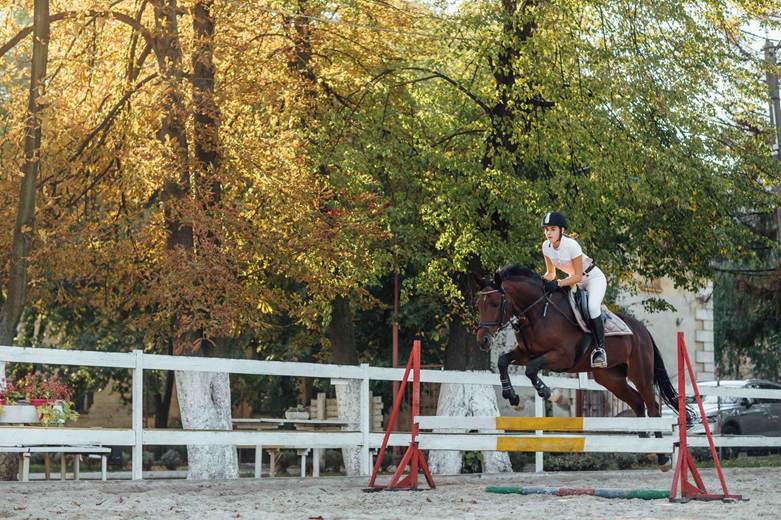
According to the Encyclopedia Britannica, showjumping is a sport in which riders are carried over a set of jumps in the proper numbered order.

They are penalized if the horse knocks over any of the jump barriers or balks, refusing to clear a jump. The event is scored based on how fast the athletes can complete the jumps and how rarely they are penalized.

Each of the jumps are different, some gauging the distance a horse can jump and some measuring how high the animal can leap. Of course, because of the judgement on time, all of the athletes are also assessed by how fast they can complete the jumps.

Notable showjumping events in 2023 include:

  • Belgium, Knokke Showjumping CSIO5
  • Spruce Meadows Pan American CSI5 Showjumping

Eventing

According to the United States Eventing Association, eventing is very similar to the human sporting event, the triathlon. This is because, like the trialthon, eventing combines three different equestrian sports into one overall test of grace and skill.

The first phase in eventing is dressage, simply displaying how skilled both horse and rider are in partnership with one another. The second phase is cross country, which involves the horse and rider completing a type of obstacle course of both natural and man-made barriers like logs and fences.

The third phase, show jumping, involves a series of fences and jumps that a horse must clear without being penalized at a quick pace.

Though this is an Olympic Event, below are some of the most popular eventing competitions scheduled to take place in 2023:

  • Adelaide International Festival Eventing CC15
  • Waregem, Eventng Nations Cup CCIO4

Summary

In summary, the popular horse sports and competitions of 2023 include dressage, showjumping, and eventing. Equestrian sports test the skill, discipline, and synchronicity of a rider and their animal. The bond between the horse and their rider is something that has increased the popularity of horse sports and events worldwide!