
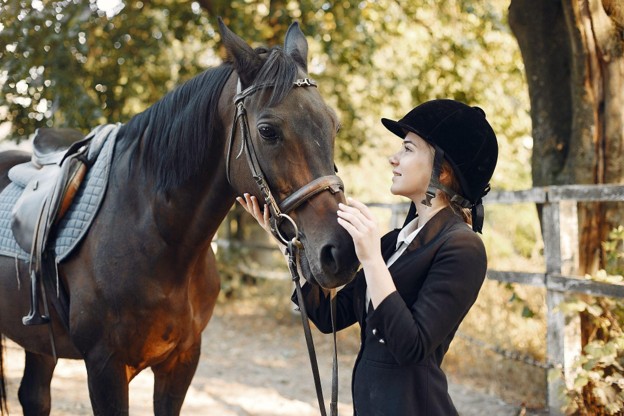
Developing a successful partnership with a horse requires far more than technical ability alone. Freddie Vasquez Jr. explains that genuine confidence between horse and rider develops gradually through consistent communication, patience, and shared experiences. While spectators often focus on competition results, the strongest performances usually reflect countless hours spent building trust long before entering the arena.
In equestrian sport, confidence cannot be forced or accelerated. It grows through steady progress, thoughtful preparation, and mutual understanding. Riders who invest time in developing that partnership often discover that lasting confidence becomes one of the greatest competitive advantages.
Trust Forms the Foundation
Every successful horse-and-rider partnership begins with trust.
Unlike many athletic pursuits, equestrian sports require two independent athletes to work together toward a common objective.
That relationship develops when both horse and rider learn to understand one another through:
- Consistent routines
- Clear communication
- Predictable expectations
- Positive experiences
- Daily interaction
Trust cannot be established in a single training session. It is built through repetition and reliability over time.
Confidence Is Built One Step at a Time
Progress in riding rarely follows a straight line.
Some days bring noticeable improvement, while others present new challenges.
Each successful experience contributes to greater confidence by helping horse and rider become more comfortable together.
This gradual development allows both partners to approach increasingly difficult situations with greater composure.
Attempting to skip important developmental stages often creates unnecessary setbacks.
Every Horse Learns Differently
Just as every rider has a unique learning style, every horse develops confidence at its own pace.
Some horses quickly adapt to new environments, while others require additional time to process unfamiliar experiences.
Factors that influence development may include:
- Age
- Previous training
- Temperament
- Physical maturity
- Competition experience
Recognizing these individual differences encourages more thoughtful decision-making throughout the training process.
Consistency Creates Security
Horses respond well to consistency.
Predictable routines help create an environment where they understand expectations and feel more secure.
Consistency may include:
- Regular riding schedules
- Familiar handling practices
- Clear communication
- Patient progression
- Positive reinforcement
Over time, these habits help establish confidence that carries into new situations and competition settings.
Communication Goes Beyond Commands
Effective riding depends on subtle communication rather than force.
Experienced riders continually adjust based on how the horse responds throughout each ride.
Communication involves:
- Balance
- Timing
- Seat position
- Leg aids
- Rein contact
- Observation
The more familiar horse and rider become with one another, the more naturally this communication develops.
Confidence Grows Outside Competition
Many of the most valuable moments occur away from the show ring.
Daily routines contribute significantly to long-term partnership.
These experiences include:
- Grooming
- Flatwork
- Trail rides
- Warm-up sessions
- Routine care
- Quiet schooling days
Each positive interaction strengthens familiarity while reinforcing trust.
By the time horse and rider enter competition, much of their confidence has already been established through these everyday experiences.
Patience Prevents Unnecessary Pressure
Modern sports often celebrate rapid progress.
Equestrian development follows a different path.
Rushing advancement may increase stress for both horse and rider while limiting opportunities to develop a solid foundation.
Patience allows:
- Skills to develop naturally
- Confidence to increase steadily
- Physical conditioning to improve
- Mental readiness to mature
Long-term success often reflects careful progression rather than rapid advancement.
Learning From Setbacks
Every rider encounters challenges.
Missed distances, unexpected refusals, difficult rounds, or unfamiliar environments all become part of the learning process.
Rather than diminishing confidence, these experiences can strengthen it when approached constructively.
Successful riders often focus on:
- Identifying lessons
- Remaining patient
- Adjusting preparation
- Maintaining perspective
- Continuing consistent work
Resilience becomes an important part of confidence.
The Rider’s Mindset Matters
Horses are remarkably sensitive to their rider’s emotions.
Calm, focused riders often create calmer environments for their horses.
Preparing mentally before riding may involve:
- Maintaining realistic expectations
- Staying patient
- Remaining adaptable
- Focusing on communication
- Trusting preparation
A confident rider helps encourage confidence in the horse as well.
Partnership Is More Important Than Perfection
Competitive success naturally attracts attention, but lasting partnerships are rarely defined by flawless performances.
Instead, they are built upon:
- Mutual respect
- Consistency
- Patience
- Reliability
- Shared experience
These qualities continue developing throughout a horse’s career.
Strong partnerships often recover from mistakes because trust already exists between horse and rider.
Confidence Extends Beyond the Arena
The relationship developed through riding frequently influences many aspects of horsemanship.
Confident partnerships often contribute to:
- Easier travel
- More relaxed training sessions
- Better adaptability
- Improved communication
- Greater overall enjoyment
This broader confidence supports both performance and long-term horse welfare.
A Long-Term Investment
Developing confidence requires time, but the investment continues paying dividends throughout a horse’s career.
Rather than pursuing quick results, riders who prioritize partnership often build stronger foundations for future success.
Each thoughtful training session contributes another layer of trust that cannot be replicated through shortcuts.
Over months and years, these small moments accumulate into relationships capable of handling increasingly complex challenges.
Final Thoughts
Confidence between horse and rider cannot be rushed because it is built through trust, communication, consistency, and shared experience. While competition results may reflect a single day, genuine partnership develops over countless hours spent learning, adapting, and growing together.
By respecting each horse’s individual pace and focusing on long-term development rather than immediate outcomes, riders create relationships that support both performance and horse welfare. In the end, the strongest partnerships are not simply measured by ribbons or rankings but by the confidence that allows horse and rider to meet every new challenge together.
