
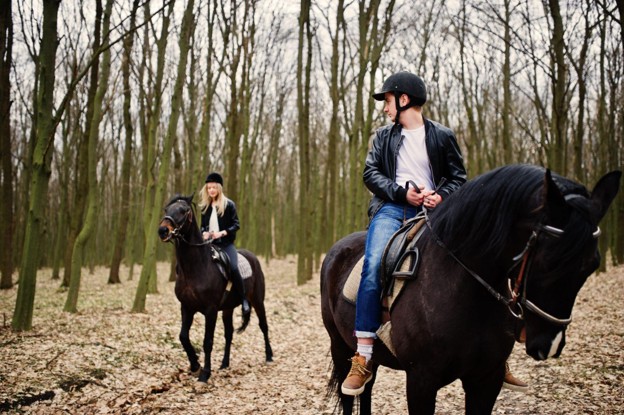
Moving from riding lessons into competition can feel like a natural next step, but the experience requires more than learning a course and showing up on the day. Freddie Vasquez Jr recognizes that competition introduces a different set of demands, asking riders to apply familiar skills while managing preparation, pressure, unfamiliar environments, and the inevitable imperfections that come with performing in public.
For a developing rider, this transition can be an important stage of growth. Competition provides an opportunity to discover how well skills hold up outside a familiar lesson environment while teaching riders how to prepare, adapt, and learn from experience.
The goal does not have to be winning immediately. A first competition can instead be viewed as a practical extension of the learning process.
Riding in a Lesson Is Different From Riding at an Event
Lessons usually take place in an environment designed for learning.
A trainer can provide instructions, adjust an exercise, explain a mistake, and help a rider regain confidence. The horse may also be familiar with the surroundings and routine.
Competition changes those conditions.
There may be unfamiliar horses, different arenas, new sounds, spectators, transportation demands, waiting periods, and a defined schedule. The rider must also remember the requirements of the class or course while making decisions independently.
That difference is important.
A rider who performs well during lessons may initially find competition challenging, not because the necessary riding skills have disappeared, but because those skills are being used in a much more complex environment.
Preparation Begins Before the Competition
Successful competition preparation does not begin when a rider enters the arena.
It begins days or weeks earlier.
Preparation can include:
- Understanding the class or competition format
- Reviewing the course or expected requirements
- Preparing equipment and clothing
- Confirming transportation and arrival details
- Establishing an appropriate warm-up strategy
- Maintaining the horse’s normal care and exercise routine
- Getting adequate rest
- Understanding the day’s schedule
These details may appear separate from riding ability, but they can influence how calmly and effectively a rider approaches competition.
Good preparation reduces the number of avoidable surprises.
Familiar Skills Need to Become Reliable Skills
During a lesson, a rider may successfully perform an exercise after receiving several reminders from a trainer.
Competition offers fewer opportunities for those reminders.
This makes reliability especially important. A rider needs to know how to maintain position, follow instructions, regulate pace, and respond to the horse without depending entirely on someone else to provide every correction.
That does not mean a developing rider needs to be completely independent before entering a competition. Instead, competition can reveal which skills are becoming automatic and which still require attention.
Those discoveries can then shape future training.
The Warm-Up Is Part of the Competition
The warm-up period deserves careful consideration.
It is not simply a chance to practice everything one more time.
The rider is preparing both physically and mentally while operating around other horses and riders. A useful warm-up should help the horse and rider establish communication without creating unnecessary fatigue or tension.
Trying to repeat every skill immediately before competing can sometimes have the opposite effect. A better approach is to focus on the elements that help the partnership feel organized and prepared.
The precise routine will differ according to the horse, rider, discipline, and competition format.
Managing Nerves Is a Skill
Nervousness is a normal part of competition.
Even experienced riders can experience increased heart rate, tension, or uncertainty before an important performance.
The goal is not necessarily to eliminate nerves. It is to learn how to function effectively while experiencing them. Simple preparation can help.
Knowing the schedule, understanding the course, arriving with sufficient time, and having a clear warm-up plan can reduce uncertainty. Riders can also use breathing, visualization, and deliberate attention to bring their focus back to the task.
Most importantly, nervousness should not automatically be interpreted as evidence that a rider is unprepared.
It can simply mean the moment matters.
The Horse Can Respond to the Rider’s Mental State
Horse-and-rider communication does not stop because competition begins.
If the rider becomes tense, distracted, or rushed, the horse may respond to those changes.
That makes self-awareness particularly valuable. A rider who notices increasing tension can use that awareness to make a deliberate adjustment rather than allowing the feeling to influence every decision. The objective is not to pretend to be completely calm.
It is to remain capable of communicating clearly.
Competition Reveals More Than Performance
A competition result provides useful information, but the final placing is only one measurement.
A rider can learn a great deal from the experience itself.
- Perhaps the warm-up was too long.
- Perhaps a particular part of the course created hesitation.
- Maybe the rider became distracted after making an early mistake.
- Perhaps the horse remained calm despite an unfamiliar environment.
These observations can be more valuable for long-term development than a single number on a results sheet.
Competition becomes useful when riders examine what happened rather than simply whether they won or lost.
Mistakes Become Learning Opportunities
A mistake during competition can feel much larger than a mistake during a lesson.
- There are spectators.
- There may be other competitors.
- The rider knows that the performance is being evaluated.
But mistakes are part of the learning process.
A missed distance, incorrect response, loss of rhythm, or moment of hesitation can provide information about where additional preparation is needed.
The productive response is not to dwell on the mistake.
It is to understand it.
- What happened?
- Why did it happen?
- Could preparation have changed the outcome?
- Does the rider need more practice with the skill?
- Would a different approach help?
These questions turn disappointment into useful feedback.
Expectations Should Match the Rider’s Stage
One of the most common challenges for developing competitors is setting expectations too high too quickly.
A rider may enter a first event expecting a polished performance because lessons have been going well. But competition introduces variables that cannot always be replicated at home.
A realistic first goal might be completing the course calmly, maintaining communication with the horse, or successfully applying a specific skill under pressure.
As experience increases, goals can become more ambitious.
This creates a progression in which competition becomes another form of development rather than a test of whether a rider is already finished developing.
Learning to Make Decisions Independently
Competition can accelerate decision-making skills.
During a lesson, a trainer may identify the next exercise or explain exactly when a rider should make an adjustment.
At an event, the rider has to process information independently.
That might involve adjusting pace, responding to a change in the horse’s attention, managing a mistake, or deciding how to approach a particular part of a course.
These decisions do not happen in isolation. They are built from training and experience. The more riders understand the reasoning behind their training, the better prepared they become to make decisions when circumstances change.
The Relationship With the Trainer Changes Too
A rider’s relationship with a trainer can evolve as competition experience increases.
The trainer remains an important source of instruction, but the rider gradually becomes more capable of describing what happened and identifying where difficulties occurred.
Instead of simply saying that something went wrong, a developing rider can begin explaining:
- When the problem started
- What the horse did
- What the rider felt
- What adjustment was attempted
- What happened afterward
That level of reflection makes future instruction more specific and productive.
Competition Should Not Replace Learning
Entering competitions does not mean that the learning phase is over.
In many ways, competition creates new questions.
A rider may discover a weakness in position, timing, confidence, course reading, or preparation. Those discoveries can then return to the training environment. The lesson becomes informed by real experience.
This creates a useful cycle:
Train → compete → reflect → adjust → train again.
Each stage contributes to the next.
Progress Is Not Always Visible on a Leaderboard
Competitive riding naturally involves results, but development cannot always be measured through rankings.
A rider who once struggled with nerves may complete an event calmly. Another may successfully recover after a mistake. Someone else may develop the confidence to make an independent decision.
Those are meaningful achievements even if they do not produce a winning result.
Long-term progress is often visible through the quality of decisions a rider makes, the consistency of communication, and the ability to remain adaptable.
Building Confidence Through Experience
Confidence develops through evidence.
A rider becomes more confident after experiencing unfamiliar situations and discovering that those situations can be managed. The first competition may feel overwhelming. The next may feel more familiar.
Eventually, preparation becomes routine, unfamiliar surroundings become less intimidating, and the rider can devote more attention to performance.
That progression cannot be rushed.
It comes from repeated exposure combined with thoughtful preparation.
Competition as an Extension of Education
The transition from lessons to competition is best understood as a change in learning environment rather than an end to learning.
- The arena becomes less predictable.
- The rider has greater responsibility.
- The horse may respond differently.
- Pressure becomes part of the experience.
Those conditions create opportunities to develop skills that are difficult to reproduce in ordinary lessons.
A thoughtful approach therefore treats competition as an educational experience.
The objective is to learn how preparation affects performance, how pressure affects decision-making, and how horse and rider communicate when circumstances become more demanding.
Over time, those lessons can make both training and competition more productive.
The most valuable competition experience is not necessarily the one that produces the highest placing. It may be the one that leaves a rider with a clearer understanding of what to practice next.
That mindset turns each event into another step forward and makes the journey from learning to competing a continuous process rather than a single leap.
