
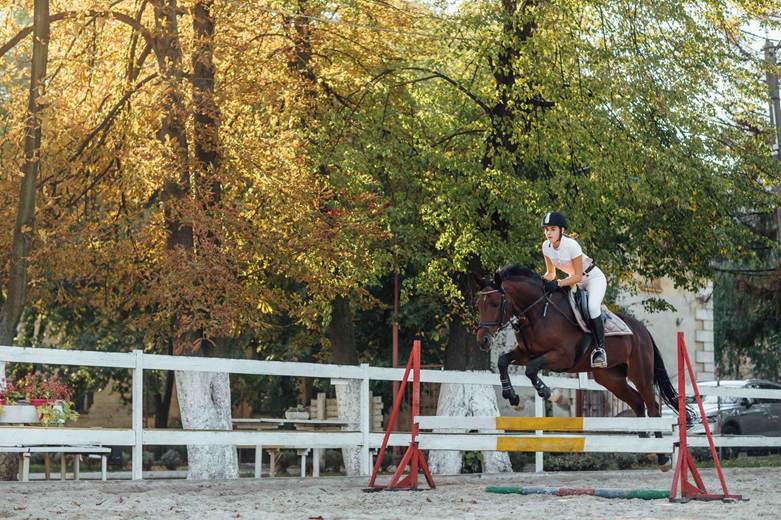
In show jumping, many of the most important decisions are made on foot. Riders with Grand Prix experience, such as Freddie Vasquez Jr., tend to treat the course walk as the point where a round is largely won or lost, long before the horse enters the arena.
Spectators often see the walk as a formality. In truth, it is where a rider turns a designer’s puzzle into a clear plan. A rider who walks well enters the ring with decisions already made, leaving full attention for the horse.
What a Course Walk Is For
A course walk turns the designer’s questions into the rider’s answers before the round starts. Every course is built to test horse and rider in specific ways. Some questions are obvious, such as a tall oxer or a tight rollback turn. Others are subtle, like a line that rides shorter than it measures or a fence placed to pull a horse’s eye away from the next one.
Finding those questions on foot means the rider is executing a plan in the ring instead of reacting to surprises.
Why Experienced Riders Walk Differently
Experienced riders walk for their horse, not just for the course, and that is what sets their walk apart from a novice’s. A newer rider often measures a line and accepts the number. A seasoned rider asks how that particular horse will handle it on that particular day, considering stride length, energy level, footing and how the horse has been jumping in the warm-up.
That shift in thinking explains why two riders can walk the same course together and leave with different plans, both of them correct.
Stride Counting Is Only the Starting Point
Stride counting tells a rider what a line measures, while judgment decides how it will ride. Course designers typically work from an average canter stride of about 12 feet, and many riders pace distances with walking steps of roughly 3 feet, so four steps equal one horse stride. Landing and takeoff space come off the total, since a horse lands a few feet past one fence and needs room before the next.
The count then has to be filtered through the horse:
- A long, scopey horse may find a distance easy that a shorter-strided horse finds tight
- Many lines can be ridden more than one way, such as five strides forward or six strides steady
- Footing, weather and the horse’s energy can all change how a line rides
The number starts the conversation. The plan is what the rider does with it.
Reading Fences as Questions
Each fence type asks the horse something different, so a good walk prepares an answer for each. Verticals test care and balance, and a flat or rushing horse is more likely to have a rail.
Oxers test power and scope. They ask for more impulsion and a rounder arc over the top.
Combinations test adjustability. With only one or two strides between elements, the approach decides almost everything.
Experienced riders also study fill, colors and decorations. A spooky wall or a bright water tray can draw a horse’s attention, and knowing that in advance shapes how the rider prepares for it.
The Track Between Fences Decides Most Rounds
Most rounds are won or lost in the space between jumps, which is why so much of the walk goes into choosing precisely where to turn, how much of the arena to use and where to land after each fence. A slightly earlier turn can save time without adding risk, while a turn that is too tight leaves a horse no room to see the next jump.
It is common to walk key turns twice. Standing on the landing spot and looking toward the next fence lets a rider picture the line from the saddle.
Jump-Off Strategy Starts in the First Walk
The strongest jump-off plans take shape before the first round, as riders note where seconds can be saved: an inside turn, a stride left out in a long line, or a landing already bent toward the next fence. Each option is weighed against what the horse can do with confidence.
Speed only counts if the fences stay up. Under standard jump-off rules, a rail adds four faults, and faults rank ahead of time, so a careful clear round usually beats a fast one with a knockdown.
From the Walk to the Warm-Up
The course walk shapes everything that follows, and many riders replay the course in their minds several times, visualizing each fence, turn and stride count until the plan feels familiar. In the schooling ring, that plan guides preparation. A rider expecting forward lines works on lengthening, while one facing tight turns focuses on balance and adjustability.
Built on Foot
Course walking is the quietest skill in show jumping, yet it touches every fence in the ring. Riders who walk carefully, count honestly and adapt the plan to the horse beneath them give themselves the best chance of a clean, confident round. The designer builds the course, but the ride is built on foot long before the bell rings.
